Although not a new discipline in the world, stretching may be unfamiliar to many people. Generally, we tend to associate muscle stretching with pre-exercise practices such as warming up. In reality, however, the science of stretching is far broader than that. It is a discipline that helps improve flexibility and relieve bodily aches and pains, and is just as essential to health as strength.
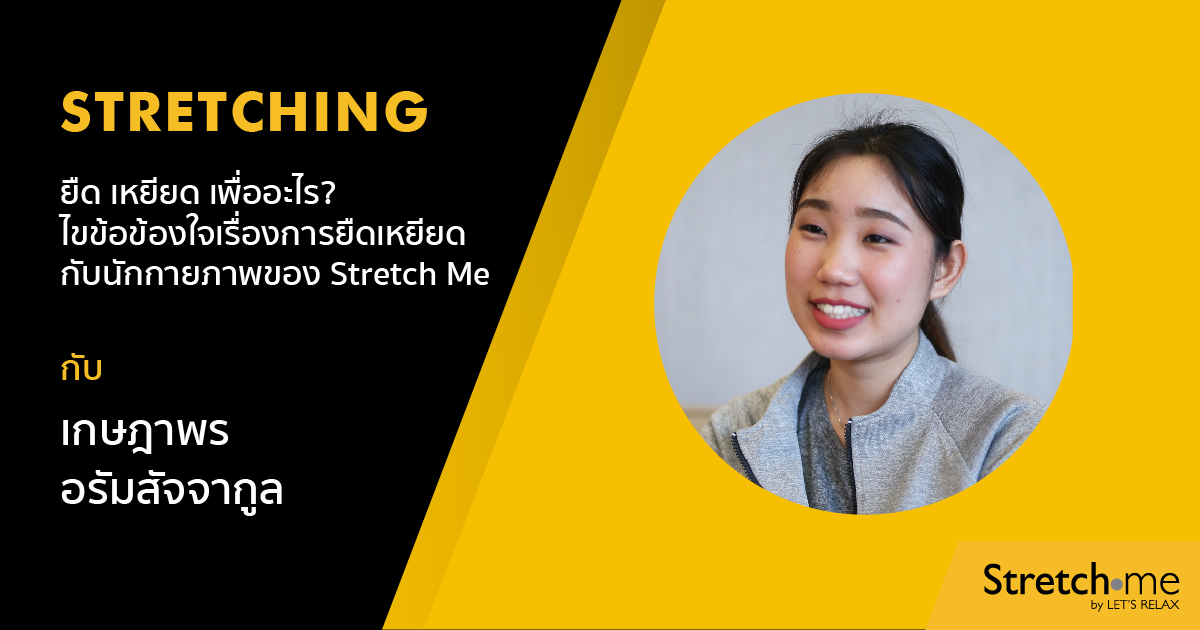
Here is a conversation with a professional physical therapist from Stretch Me, “Kasetaporn Aramsatchakool,” who helps clear up common questions about the science of stretching, its benefits, and why it is important for the body.
Q: What is the science of stretching?
A: Simply put, the science of muscle stretching involves elongating the muscles and holding them there until the muscles relax and release their tension. Someone who can do this properly must have a strong understanding of anatomy and be able to identify which muscle to stretch and how, for example when a client feels tightness in the upper arm.
Q: Why do we need to stretch our muscles?
A: When we move our bodies, muscles are constantly contracting and extending. When we repeat daily activities over and over, muscles tend to tighten and shorten. Stretching helps relax them. If we never stretch, the muscles can become so tight that they form knots, leading to aches, pains, and chronic injuries.
Q: Does stretching hurt?
A: It shouldn’t hurt. We explain the difference between pain and tightness to the client and communicate throughout the session. Mild discomfort that is tolerable usually comes from muscle tightness. You may notice that the first stretch feels more uncomfortable, but the second and third feel easier because the muscles begin to adapt and relax.
Q: Can muscles relax on their own just by resting?
A: Resting or temporarily stopping the use of certain muscles can help to some extent, but for people who use their muscles heavily all the time, rest alone is not enough.
Q: How can we tell if we are overusing our muscles?
A: There are two main patterns.
- Sudden injury from movement, with symptoms such as inflammation, pain, swelling, redness, and heat.
- Overuse leading to muscle fatigue, with symptoms ranging from tightness and pain to numbness and weakness. This often occurs when very tight muscles compress nearby nerves.
To visualize it, nerves are like hoses that carry water and nutrients to different parts of the body. When tight muscles press on the nerves, it’s like stepping on a hose, causing weakness and numbness.
Q: Can stretching help relieve these symptoms?
A: Yes, stretching can help. However, for clear results or therapeutic purposes, it should follow a program designed by a physical therapist. The therapist first assesses the client’s condition and muscle tightness, then determines the appropriate frequency. For very tight muscles, stretching may be needed 2–3 times per week, while once a week may be enough for those without significant tightness.
Q: How many types of stretching are there, and how are they different?
A: There are many types, but simply put, they can be divided into two categories: active stretching and passive stretching.
Active stretching is self-stretching that clients can do on their own, such as following videos on YouTube or copying stretches they have seen. Passive stretching involves having someone else stretch you, like at Stretch Me.
The difference is that when people stretch themselves, they often stop as soon as they feel tightness, sometimes before the muscle is truly stretched. For example, stretching the right arm may require using the left arm, which can cause tension in the left arm and prevent full relaxation. This reduces effectiveness and may even cause muscle strain or injury.
With passive stretching by a physical therapist, muscles can be stretched through their full range of motion and fully relaxed at the same time. This provides maximum effectiveness and reduces the risk of injury.
Q: Is stretching different from warming up or cooling down?
A: Warm-up and cool-down are forms of active stretching and are suitable for athletes. Office workers, on the other hand, benefit more from passive stretching, as they need full-body relaxation. Athletes can also benefit from passive stretching after exercise, when the body needs comprehensive stretching.
Q: Who should stretch?
A: People with muscle tightness, muscle pain, difficulty turning or lifting objects, athletes with muscle injuries, and even people without injuries who want relaxation can benefit. Some clients even discover spinal curvature issues during stretching sessions.
Ideally, people should start stretching before symptoms appear, as prevention is easier than treatment. Those with existing symptoms should stretch regularly; the more severe the symptoms, the more frequent the stretching should be, gradually reducing frequency as flexibility improves.
Q: How can we tell if our muscles are tighter than normal?
A: Look for changes in everyday activities. For example, if a golfer can no longer complete a full swing, it may be due to chronically tight muscles. We use our muscles for many hours every day but rarely stretch or relax them like working constantly without rest until the body eventually shows signs of injury.
Q: Can we feel the results of stretching immediately?
A: Most clients feel immediate relief after stretching lighter, more relaxed, and more comfortable. For example, someone who drives frequently may notice that sitting in the same driving posture no longer causes tightness or pain after stretching. Clients can test this by repeating activities that previously caused discomfort.
Q: What kind of feedback do clients give?
A: Feedback is generally good to very good. Some clients express immediate relief, such as feeling lighter, walking more comfortably, and having reduced or eliminated pain without recurrence. Others may not say much right after the session but return repeatedly for continued service.
Q: Besides treating muscle injuries, are there other benefits of stretching?
A: Stretching greatly improves flexibility, allowing muscles to lengthen further and joints to move through a fuller range of motion. This helps prevent injuries in daily activities. Tight muscles can cause injury even during simple movements, while flexible muscles reduce that risk.
Stretching also benefits blood circulation, as flexible muscles are less likely to compress blood vessels, allowing blood to flow more smoothly.
Q: What is the service process at Stretch Me?
A: When clients arrive, they use a tablet to choose a course and sign up for membership, which includes various benefits and promotions. They then undergo an initial consultation to assess symptoms and determine the most suitable course, followed by changing into clothes provided by the studio.
Clients fill in personal information on the tablet, indicating areas to focus on or avoid and the preferred intensity level. This information is saved for future visits.
The stretching session begins with relaxation using aromatherapy and stretching of the head and shoulders, followed by the personalized program. It ends with education on self-stretching exercises that clients can do at home, tailored to their specific conditions.
After the session, the physical therapist records detailed notes in the system, including what was stretched and personal preferences such as if a client gets cold easily and needs extra blankets so future sessions can be even more personalized.