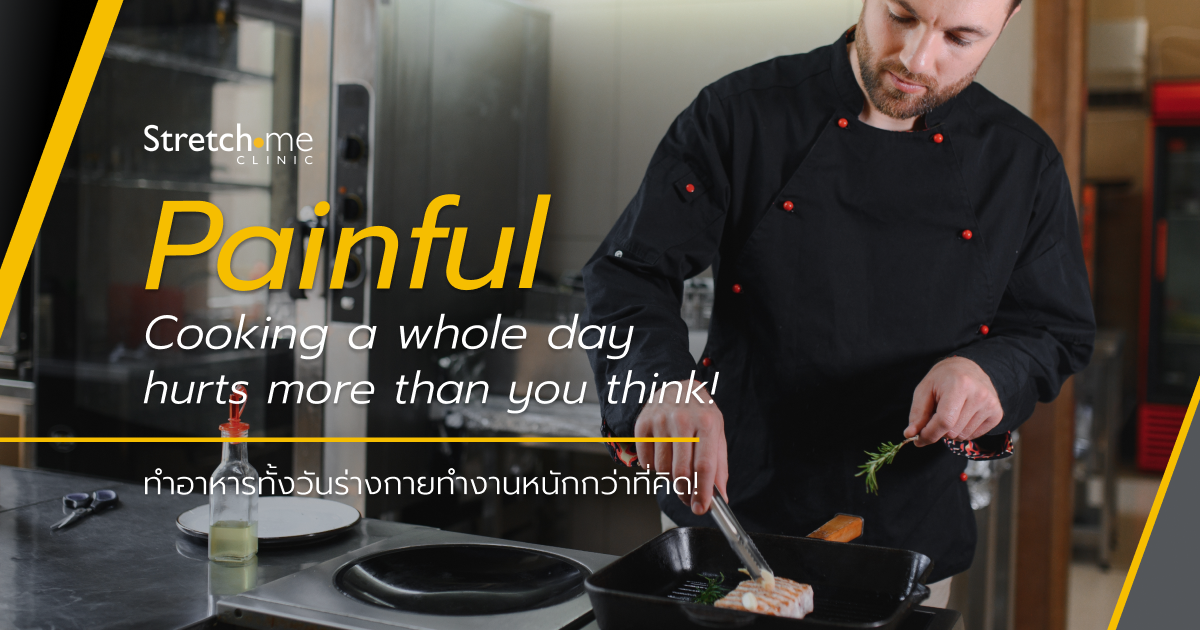
Behind every dish that leaves the kitchen, there’s more than just flavor and skill.
There is the body of the person behind the stove standing, bending, lifting, chopping, stirring, and repeating the same movements hundreds of times a day,
in a hot, cramped environment with barely any time to rest.
Many people think aches and pains are just “part of the job.”
But from a physical therapist’s perspective, these are warning signs of cumulative musculoskeletal injury, also known as Chronic Musculoskeletal Strain.
If left untreated, it can develop into chronic pain that becomes difficult to manage.
Why kitchen work carries a higher risk of chronic pain than you might think
Many occupational health studies agree that kitchen professionals are among the highest-risk groups for chronic muscle inflammation.
The reason is simple: the body works hard, but recovery time is minimal.
Key contributing factors include:
Standing in the same position for long periods
Lower back and leg muscles remain contracted continuously, reducing blood circulation and causing fatigue and pain to build up.
Repetitive use of hands and wrists
Chopping, stirring, scooping, and operating equipment overload the wrists and forearms, increasing the risk of tendon inflammation.
Workstations not suited to body mechanics
Counters or cutting boards that are too high or too low force the neck, shoulders, and shoulder blades into unnatural positions for extended periods.
High kitchen temperatures
Heat accelerates muscle fatigue and slows recovery compared to normal conditions.
When these factors accumulate day after day, pain gradually creeps in stealing focus, mobility, and the joy of cooking little by little.
Self-care strategies that actually work in the kitchen
Preventing chronic pain doesn’t have to be complicated.
It just needs to be consistent and realistic for real kitchen life.
Physical therapists recommend:
Rest your muscles every 1-2 hours
Even 1–2 minutes can significantly reduce muscle tension buildup.
Stretch your back, shoulders, neck, and wrists regularly
This improves blood flow and helps muscles recover faster.
Adjust counters and cutting boards to waist height
Reduces unnecessary bending and shoulder elevation.
Wear supportive footwear or anti-fatigue mats
Helps distribute pressure and reduces strain on knees, legs, and the lower back during long standing hours.
Small habits, done consistently, can dramatically extend the working life of your body.
Professional stretching helps kitchen professionals more than you think
Kitchen workers often develop occupation-specific tension points lower back, shoulder blades, neck, shoulders, wrists, and hips.
General stretching may help to some extent, but targeted, professional stretching done correctly and tailored to each person’s muscle condition can release deep-seated tension, improve flexibility, reduce inflammation, and lower the risk of recurring pain.
The real results kitchen professionals notice:
- Greater ease of movement
- Less fatigue
- No need to push through pain during service
Because cooking should be a source of joy not physical suffering.
A healthy body is the most important tool in the kitchen.
Taking care of it today is an investment in working longer, stronger, and with a better quality of life.
Stretch me Clinic – Unlock every limit. Conquer every movement.