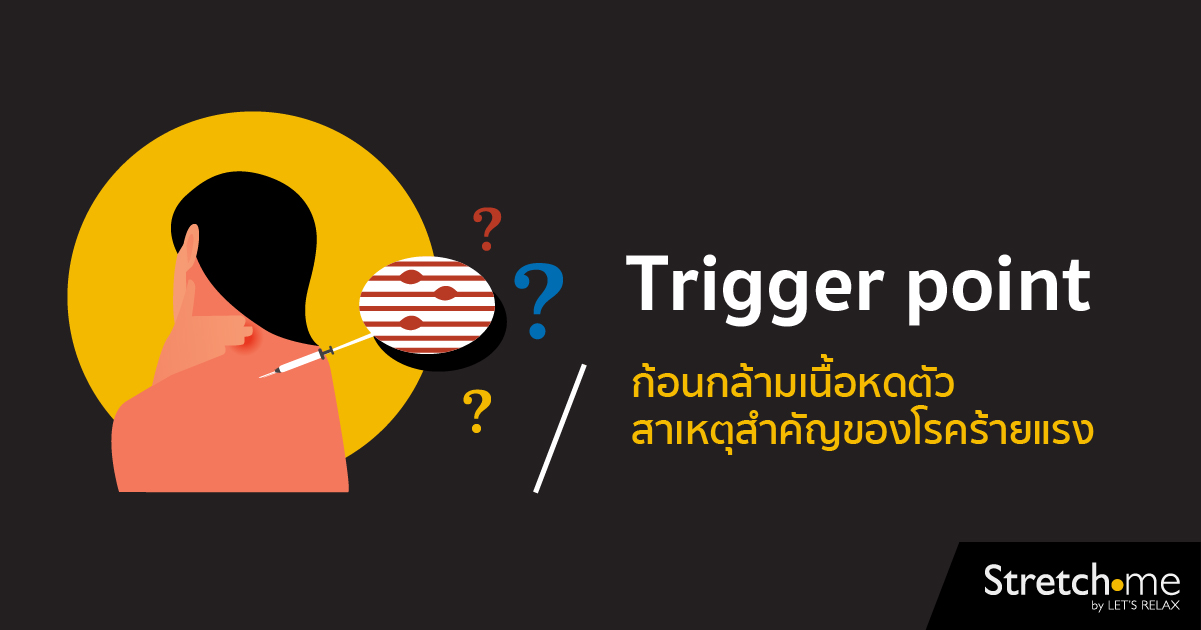
What Is a Trigger Point? by Stretch Me
A trigger point is an area of muscle that has tightened into a knot and does not relax. When you palpate it, it feels like a small, hard lump; pressing on it causes pain or a sharp, stabbing sensation. During massage, the muscle may twitch or spasm when stimulated, such as by pressure or dry needling. Trigger points most commonly occur in the upper body starting from the neck, shoulders, upper back, shoulder blades, and back. Today, more than 30% of people have muscles that tighten easily and lack flexibility, leading to frequent aches, pains, and strains. Whether you are an office worker, an athlete, or simply someone with habitual poor posture, you are all at risk.
If you experience deep, aching pain in the muscles either constantly or specifically while sitting at work unexplained headaches, migraines, insomnia, or numbness in the hands and arms, and if massage, topical muscle-relief products, or muscle relaxant medications only provide temporary relief before symptoms return, it may indicate that you have chronically tight muscles with hidden trigger points throughout your body without realizing it.
From a medical perspective, trigger points develop when muscles remain contracted for long periods. This sustained contraction compresses the blood vessels within the muscle, reducing blood flow and oxygen supply. As a result, the production of cellular energy (ATP) is impaired, disrupting the normal cycle of muscle contraction and relaxation. This causes the muscle to overwork and tense up involuntarily even without significant effort eventually forming trigger points.
The dangers of trigger points are not to be underestimated. If left untreated, they can lead to changes in both the nervous and muscular systems, disrupting the balance of neurotransmitter production in the brain and muscles. This makes muscles even more prone to tightening. Over time, trigger points can also affect the body’s structure, causing issues such as uneven shoulder height, a rounded back, or differences in leg length potentially leading to a wide range of further health problems.
Fortunately, there are now several ways to help relieve pain caused by trigger points, including physical therapy and stretching. However, these methods have limitations and must be performed by highly skilled and experienced professionals, such as the physical therapists at Stretch Me. Most importantly, once symptoms improve, it is essential to change daily movement habits whether at work, while standing, walking, sitting, or sleeping and to see a specialist regularly for ongoing muscle care to prevent recurrence.
Interested in our services at Stretch Me by Let’s Relax, a muscle stretching studio led by physical therapy experts? We’re ready to provide professional consultation reach out and click to get in touch.