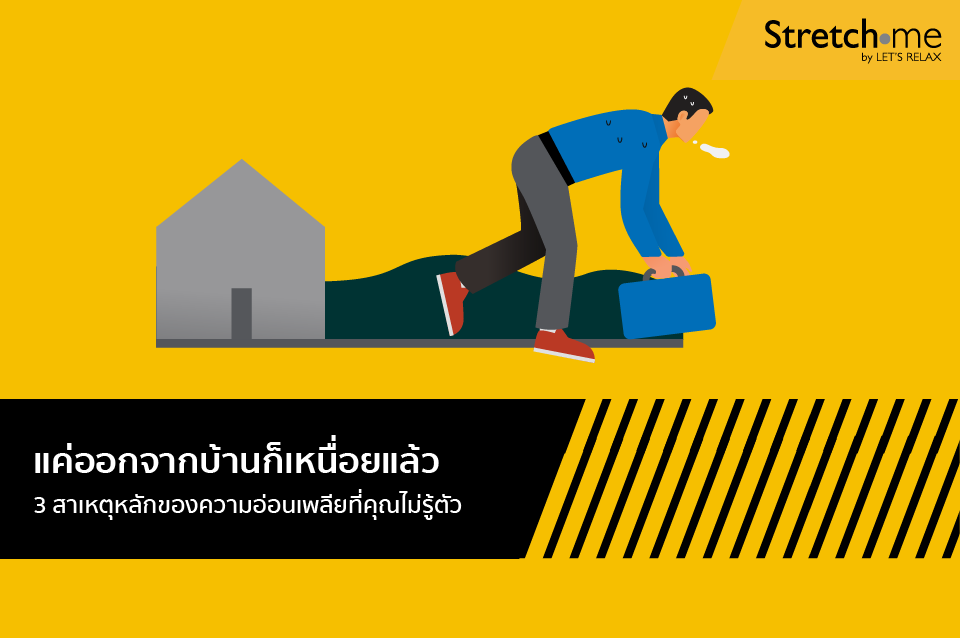
Have you ever experienced stepping out of your condo, getting into a car on the way to work, or simply boarding the BTS, only to already feel exhausted? Sometimes Bangkok feels like a city filled with accumulated fatigue, much like many major cities around the world. Here, we will unpack the factors of “urban life” that make you feel drained and suggest ways to cope with them.
1. Urban life is complex
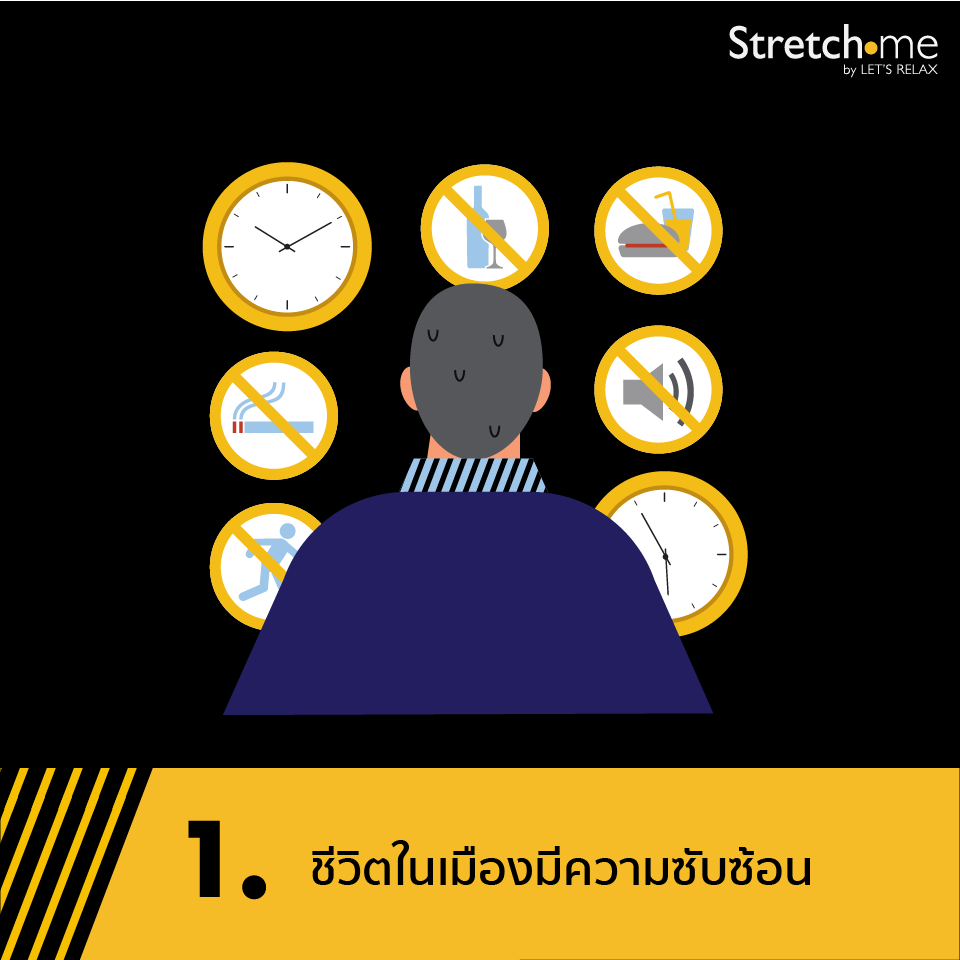
Living in a large city means coexisting with many other people, so certain rules become essential. These include visible rules such as written laws, as well as invisible rules in the form of social norms—for example, obeying traffic laws, standing behind the yellow line at train stations, following university culture, or arriving on time for appointments.
These rules always come with costs in terms of time and money, which act as the mediums of exchange in big cities.
On the positive side, following rules makes living together easier, or in other words, it allows us to “predict” to some extent what we will encounter in daily life. At the same time, however, the rules we have grown accustomed to following can also create fatigue without us realizing it.
That is why sometimes we should escape from familiar rules by traveling to other places, spending time with nature, or engaging with societies that operate under different kinds of “order.” This can allow us to truly “rest” from our city lives.
2. High cost of living

Life in the city is far more expensive than life in rural areas, and the closer you are to the city center, the higher the costs. From food and housing to transportation, the basic necessities of urban life are priced much higher than in other areas. Yet many people are still unable to refuse living in the city, for various reasons.
The mechanisms of the city constantly beckon us to spend money on everything, especially convenience. For example, if given a choice, no one would want to spend two hours commuting to work while being squeezed into public transportation during rush hour. However, more comfortable modes of transportation usually come with higher costs.
The high price of convenience pushes city dwellers to strive for enough power or income to afford it. Until we reach that point, pressure, stress, and discomfort remain constant companions.
The solution to this problem is actually not very difficult. Discomfort exists at many levels—from extremely unbearable, such as walking 20 kilometers to work every day, which no one would do, to more tolerable levels, such as standing crowded on the BTS for five stations. Finding a level of discomfort that is “bearable” is a compromise between ourselves and urban society. This principle applies not only to commuting, but also to other basic aspects of life.
3. Cities make us sick
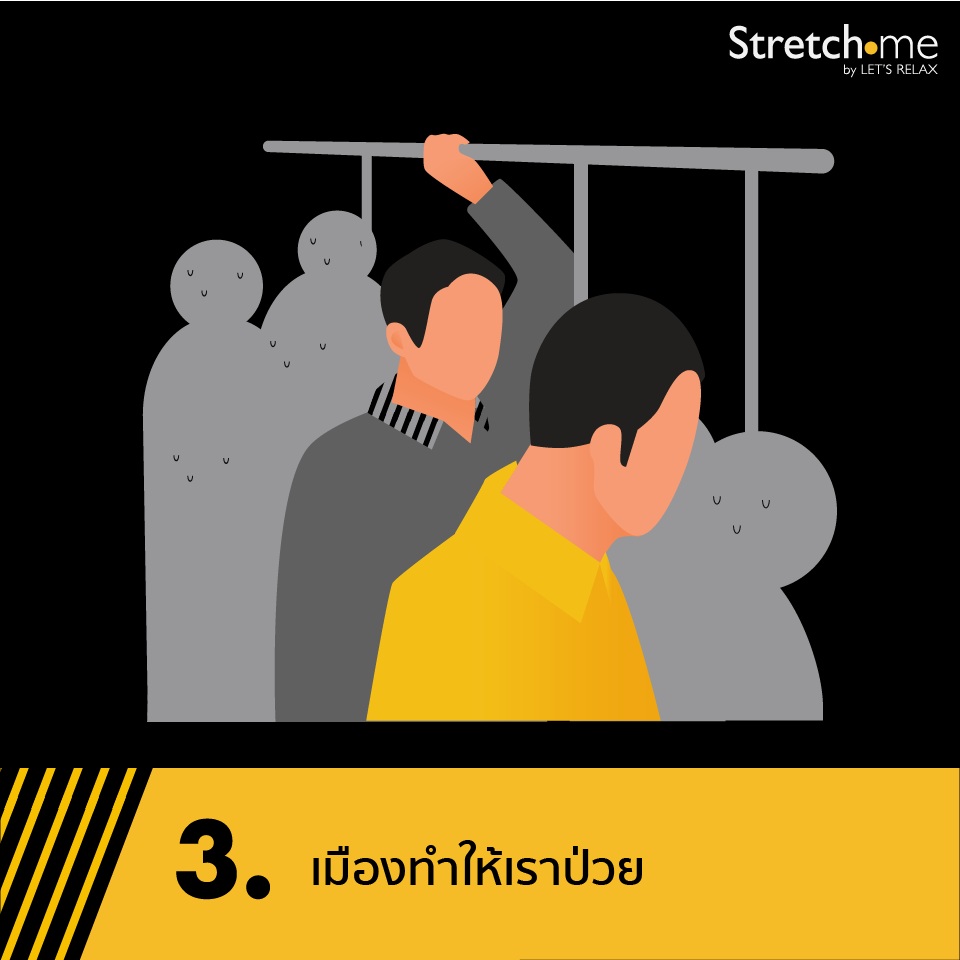
Living in large cities can lead to a surprising number of illnesses. One of the main causes is the urban lifestyle itself. City dwellers often have too few opportunities to exercise. Walking or cycling to work is rarely a good option due to inadequate sidewalks, roads, and transportation systems. Once at work, we usually sit with documents or in front of computer screens for at least another eight hours. Sitting for such long periods on a regular basis can lead to cumulative muscle injuries.
In addition, living in the city can cause anxiety and depression. Loneliness from urban life, concerns about others’ expectations, and especially the strong influence of social media all contribute to increasing levels of worry and mental strain.
Making time to exercise, stretch, or consult physical health professionals to keep the body in good condition can greatly help us feel refreshed both physically and mentally. In the long run, however, adjusting lifestyle behaviors such as sitting posture at work and one’s attitude toward oneself—will help keep us further away from illnesses caused by city life.