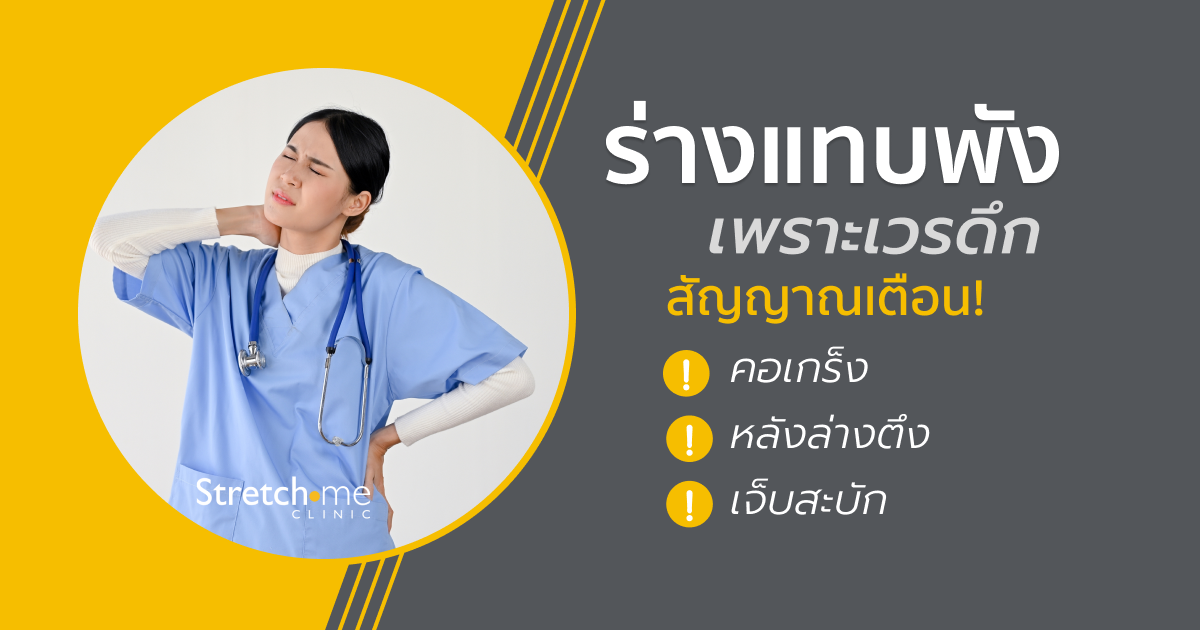
For many nurses, night shifts are simply part of the job.
What never truly adapts, however, is the body.
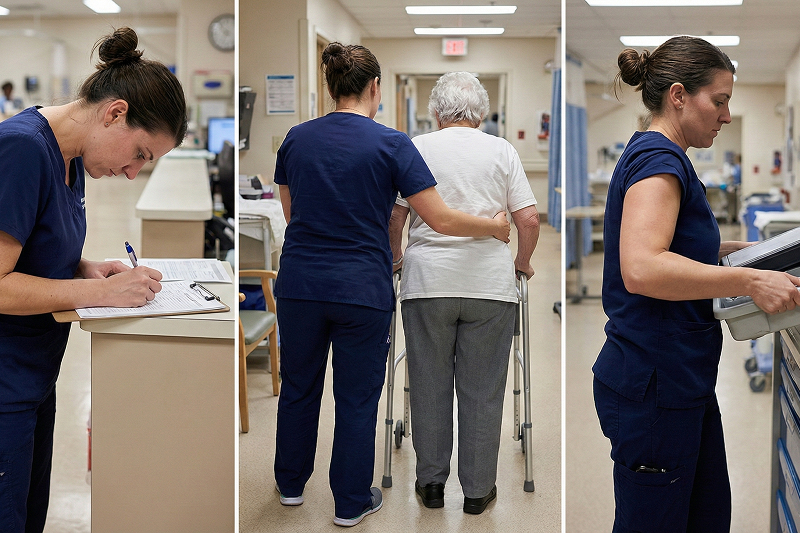
Throughout the night, muscles are used repeatedly with little to no real rest
supporting patients, lifting equipment, bending to chart,
and walking nonstop across the ward while already fatigued.
What follows is rarely pain in just one place.
It’s tension that seems to hit all at once.
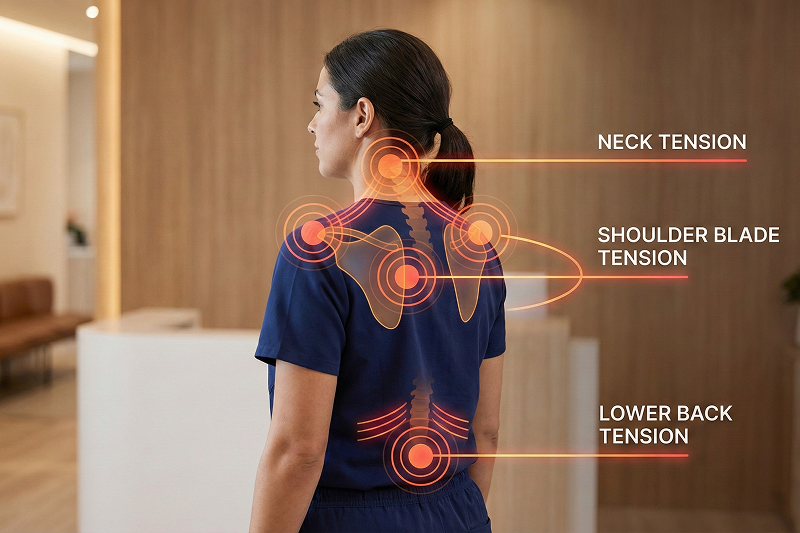
A stiff neck.
A tight lower back.
Shoulder blades that ache as if they’ve been clenched for hours.
This isn’t a coincidence.
Why do night shifts wear the body down faster than day shifts?
The answer lies in a powerful combination:
fatigue + repetitive movement + incomplete recovery.
When the same muscle groups neck, shoulders, upper back, shoulder blades, and lower back
are engaged continuously throughout the night, the body slips into sustained muscle guarding without you realizing it.
Add disrupted sleep rhythms into the mix,
and the body’s natural repair process can’t fully do its job.
The result is waking up with accumulated pain,
which gradually worsens if left unaddressed.
Over time, this can develop into the chronic issues many nurses know all too well:
persistent tightness that interferes with work,
and deep fatigue that no amount of rest seems to fix.
Practical ways to care for your body when working night shifts
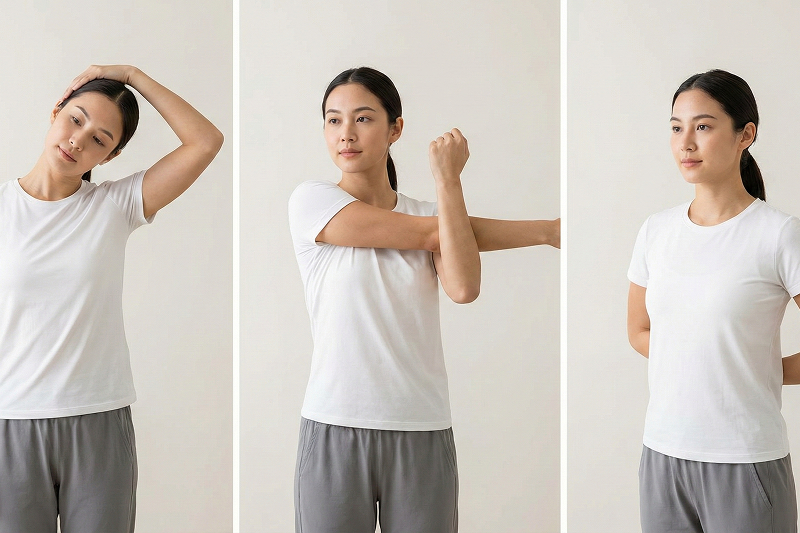
✔ Gently stretch your neck, shoulders, and shoulder blades for at least 3 – 5 minutes before starting your shift
✔ Avoid bending forward for long periods without changing posture
✔ Use back-safe lifting techniques bend your knees, avoid twisting your waist
✔ Prioritize sleep quality after your shift, even if total sleep time is shorter
✔ If you notice radiating pain, numbness, or persistent discomfort, address it early
Because the longer you wait,
the harder recovery becomes.
When self-stretching isn’t enough, deeper care matters
Professional stretch therapy (Stretch Therapy) helps release deeply accumulated tension more precisely
especially in muscle layers that are difficult to reach on your own,
such as the shoulder blades, neck, and lower back.
Many people notice that their body feels lighter,
breathing becomes deeper and easier,
and the pain carried through the night gradually fades.
Even when your job is to care for others,
your own body deserves the same level of care.