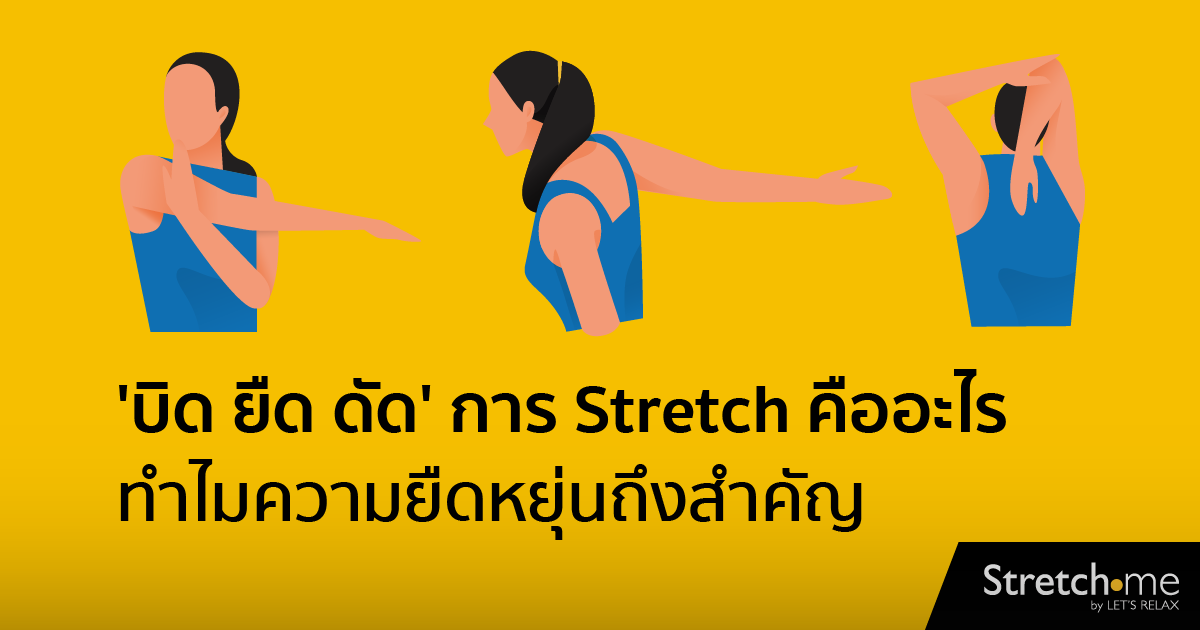
Modern urban people don’t devote themselves only to work.
Many have also begun to take better care of their health by exercising.
Many people exercise intensely, using almost every muscle group. In the long run, this certainly benefits the body. However, the problem arises when we overuse our muscles without stretching them properly this can lead to issues.
Muscles that are not stretched or twisted regularly will begin to stiffen and lose their elasticity. When muscles lack flexibility, it can cause soreness and discomfort, and more importantly, it increases the risk of injury. This can happen whether you’re doing extreme sports, weight training, or even sitting at work for long hours.
All of these activities involve repeatedly using the same muscle groups. Therefore, we should regularly restore flexibility to the body through a simple but often overlooked method: stretching.
When we talk about stretching, we often think of stretching before or after sports or exercise namely warm-up and cool-down. Although both are called stretching, they are actually quite different in purpose and method.
We warm up to prepare the body for muscle use, joints, tendons, and even the heart. Warm-up also helps dilate blood vessels so that oxygen can be delivered to the muscles during exercise. Therefore, warm-up stretches focus on repeated movements of the body to activate muscles, increase heart rate, and raise body temperature. This type of stretching is called dynamic stretching.
Cool-down stretching, on the other hand, aims for the opposite effect: helping the body relax, lowering the heart rate, and reducing body temperature. This type of stretching is called static stretching, which focuses on stretching and holding a position for a period of time. It helps release muscle tension, increase flexibility, reduce the risk of injury, and improve the performance of the stretched muscles.
Outside of the gym or sports field, stretching in daily life is just as important. It can help prevent common injuries, such as turning over in bed, sleeping with a stiff neck, stepping up stairs, or sitting at a desk for long periods activities that can lead to the very common condition known as Office Syndrome.
Stretching also helps improve posture and appearance. Modern urban workers who spend most of their time sitting often develop poor posture because they overuse the neck, back, and shoulder muscles muscle groups that greatly influence movement and posture. This overuse causes stiffness, leading to abnormal and unbalanced standing and walking postures. Stretching addresses this problem directly by increasing flexibility and gently bending and twisting those muscle groups, which in turn enhances confidence in one’s overall appearance.
Flexible muscles make the body feel refreshed and energetic. Turning left or right doesn’t require force; bending, twisting, or standing up doesn’t cause fear of strains; walking becomes balanced without hunching or stiffness. Generally, stretching can be done on your own to a certain extent, using your body weight or simple equipment.
However, in many cases especially when treating symptoms seriously, it is highly recommended to have a professional assist with proper pressing, twisting, and stretching techniques in the correct positions.