Most people who call themselves “active” aren’t doing what their body actually needs.
Walking to the office, housework, standing at a desk these count as movement. But a landmark study tracking over 200,000 people for nearly nine years found that low-intensity daily activity barely reduces the risk of serious disease.
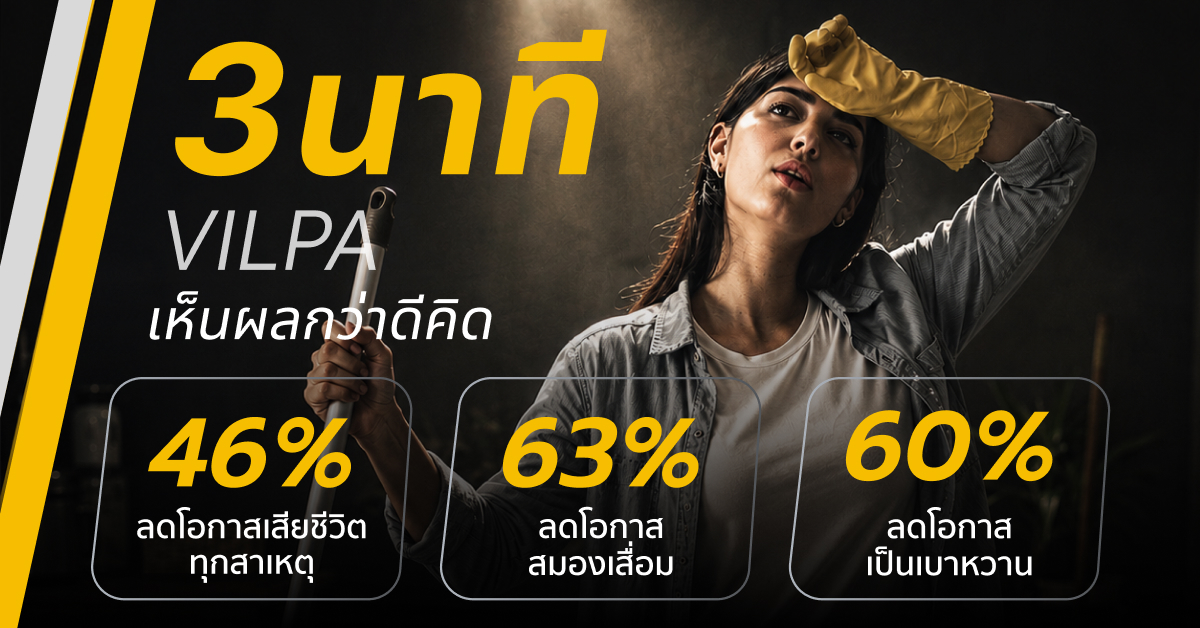
What does? Three minutes of genuine vigorous effort per day.
That’s the finding behind VILPA and the numbers are hard to argue with.

What VILPA Is, and Why the Numbers Are So High
VILPA stands for Vigorous Intermittent Lifestyle Physical Activity.
The concept was developed by Professor Emmanuel Stamatakis at the University of Sydney. The core
insight: people who don’t exercise formally can still gain significant health benefits if the activity they do is vigorous enough to make them breathless.
Just 1-2 minutes of vigorous effort, three times per day. No gym required.
Examples:
· Sprinting up a staircase
· Doing burpees or squats until breathless, wherever you are
· Swimming a hard 60-second lap
· A cycling sprint to maximum effort
The key variable isn’t the format. It’s the intensity.
The 2026 study the largest ever on this subject, 200,000+ participants, ~9 years of follow-up found:
· All-cause mortality risk 46%
· Dementia risk 63%
· Type 2 diabetes risk 60%
· Fatty liver disease risk 48%
· Chronic lung disease risk 44%
· Cardiovascular mortality risk 31%
These outcomes are comparable to people who meet standard exercise guidelines (150 minutes of moderate activity per week) achieved in just 3 minutes per day.
Why Intensity Matters More Than Frequency (For Certain Conditions)
The same research found that for some conditions dementia, chronic lung disease, and inflammatory diseases intensity outperforms volume.
The mechanism comes down to three biological responses:
BDNF (Brain-Derived Neurotrophic Factor)
This protein drives the formation of new brain cells, protects against neurodegeneration, and helps clear amyloid plaques associated with Alzheimer’s. It is only meaningfully triggered by high-intensity exercise. A gentle walk doesn’t cross that threshold.
Ischemic Preconditioning
Short bursts of vigorous effort condition the heart to withstand stress. The heart is essentially stress-tested repeatedly in small doses, building resilience against future cardiovascular events.
Heart Rate Variability (HRV)
HRV is one of the most reliable long-term predictors of health and longevity. Vigorous exercise is one of the most effective ways to raise it.
The body doesn’t respond to movement in general. It responds to movement that challenges it enough to force adaptation. That threshold is higher than most people reach on a typical “active” day.

The Part VILPA Research Doesn’t Tell You: Movement Quality Sets the Ceiling
VILPA research assumes the body can move freely. Most bodies can’t.
When movement is restricted by tight hip flexors, limited thoracic rotation, or posterior chain stiffness the intensity ceiling for every vigorous effort drops. The body compensates, loads shift to the wrong structures, and what should be a powerful minute of vigorous stimulus becomes a compromised movement pattern under load.
Hip Flexor Tightness
Cause: Prolonged sitting combined with high training volume without adequate stretching
Effect: Reduced squat depth, shortened running stride, lumbar spine compensation
VILPA impact: Less vigorous output from squats, lunges, and any hip-dominant movement
Thoracic Spine Restriction
Cause: Repetitive desk posture, forward head carriage, lack of rotational movement
Effect: Shoulder compensation during pushing/pulling movements, impingement risk
VILPA impact: Burpees and push variations load the wrong structures higher injury risk, lower stimulus
Posterior Chain Stiffness (Hamstrings / Glutes)
Effect: Reduced stride efficiency, Achilles overload, compromised hip drive
VILPA impact: Sprints and stair climbs are limited in output before the threshold that matters is reached
These restrictions don’t stop you from exercising. They stop you from getting vigorous enough to make it count.
🗒️resource:
https://link.springer.com/article/10.1186/s12966-026-01876-2
https://pmc.ncbi.nlm.nih.gov/articles/PMC11874358/
https://jamanetwork.com/journals/jamaoncology/fullarticle/2807734
Stretch me Clinic works in the dimension that training logs don’t measure:
· Hip Flexor Release restores full hip extension for deeper squats and longer strides
· Thoracic Mobility Work reopens rotation and extension for unrestricted upper body effort
· Posterior Chain Lengthening reduces tension through hamstrings and glutes for efficient vigorous movement
· Movement Symmetry Assessment identifies left-right imbalances before they become injuries
When movement quality improves, every vigorous burst reaches higher intensity. BDNF is properly stimulated. The cardiovascular system is genuinely challenged. The adaptations that VILPA research promises actually happen.
Three minutes is the same for everyone. The outcome isn’t.
Three minutes a day is enough but only if your body can actually get vigorous.
Unlock your movement first. Then let VILPA do its job.
Recovery that your body deserves.
Book your session via LINE: @Stretchme
(Advance booking recommended at least 1 day prior)